When Talent Is the Constraint, Benefits Become Strategy
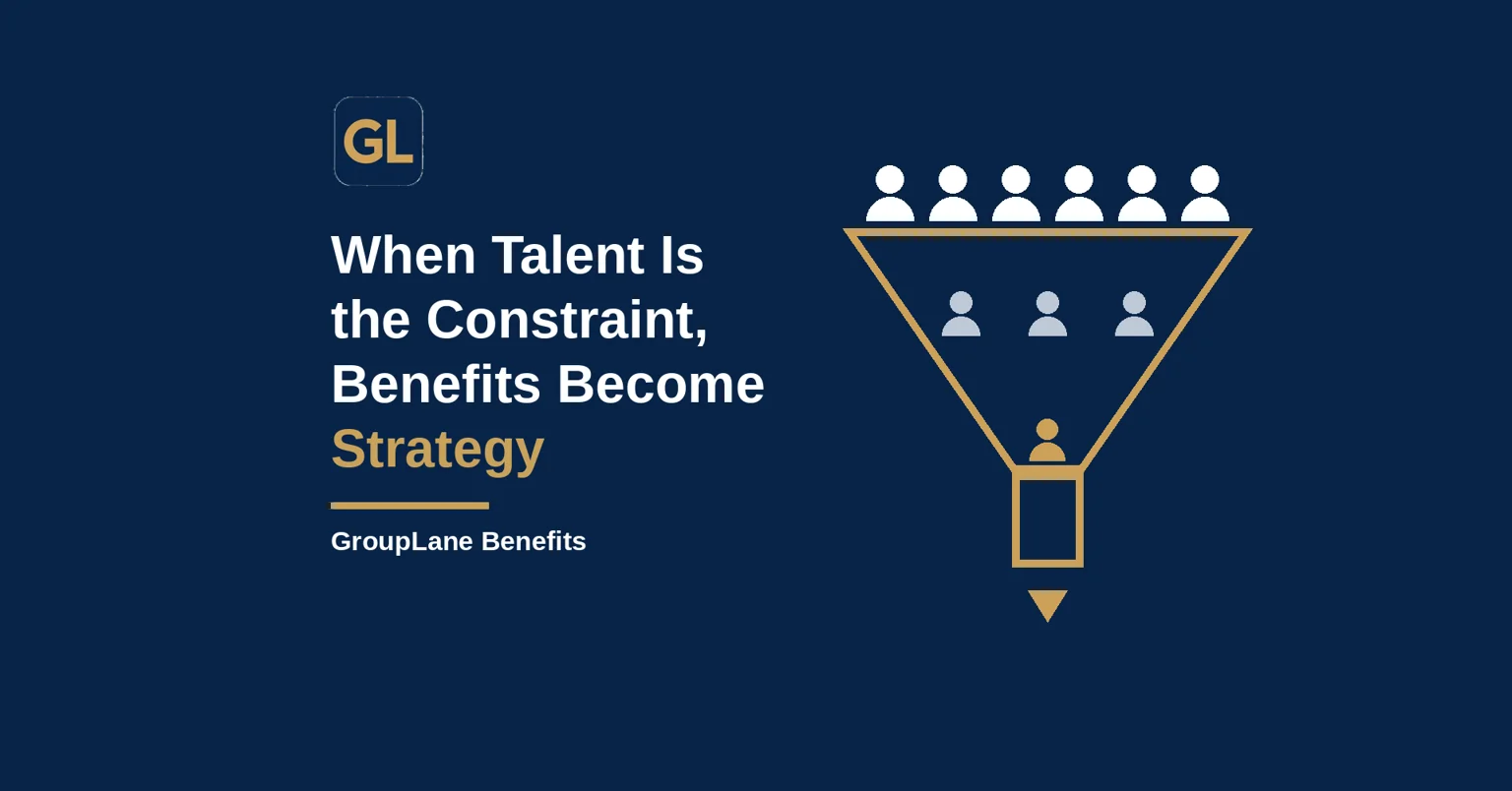
If your business depends on hard-to-replace people, benefits should not be treated as a separate HR expense. They are part of the operating system that prevents capacity, quality, and growth from being constrained by a shortage of skilled talent.
When comparing job offers, people look beyond salary. They ask what happens if someone in the family gets sick, whether the plan fits their stage of life, and whether the employer has thought seriously about the people doing the work. For many candidates and employees, the health plan is one of the first things they check.
Most owners treat benefits as an expense to control. Yes, you need to watch your numbers. But if the only question is cost, you miss the more important question: what does this plan do for hiring, retention, and the people whose skills limit your growth?
Why benefits need to fit your people
The same plan will not appeal to everyone. A recent graduate, a parent with children at home, and a middle manager supporting a family may value different things—the benefits you offer need to align with the people you most need to hire and retain.
What the right fit does for you:
It gives people a reason to stay.
It gives candidates a reason to choose you.
Lower turnover means a more stable team, fewer mistakes, and less time spent training replacements.
If growth depends on keeping the people who do the work, then a benefits plan that helps retain them is more than a cost to manage. It becomes part of your competitive advantage.
When talent is the constraint
For years, I have helped manufacturers identify the constraint: the one factor that limits how much the whole operation can ship. If the bottleneck stays the same, improving every other workstation will not increase output. The discipline is to find the limit, protect it, and improve it first.
Too often, we think of the constraint resource as a machine. But in many companies, that resource is talent. Overtime can help temporarily, but when you cannot hire the skills you need, work piles up on the few people who have them. In a rural area or small town, finding those skills can be especially difficult, so your offer has to protect the people you already depend on.
Those people do more than keep the work moving. They improve the business: operators, crew leads, and managers who spot better methods, teach the next person, and prevent avoidable mistakes. They are often the people your growth plan depends on.
When people are the constraint, the same discipline applies:
Get the most from the team you have.
Line everything else up to support them.
Then add capacity.
That means keeping the skills you already have and attracting the ones you need. Your benefits program is part of how you do both.
A lesson from a sign factory
Early in my career, I worked with a sign company that printed a lot of vinyl on a four-color screen-printing line. It wasn't a high-tech operation, but screen printing required judgment, hand skill, and experience, and competition for those workers was strong. That line was the plant's constraint.
The owner complained that people wouldn't stay in that job. Within weeks of starting, they would transfer to another position in the shop.
Bad supervisor? No. It was a small operation, and they still had the same boss.
Dangerous work? Terrible conditions? No. They moved across the aisle!
The skilled job controlling the entire plant's output was the lowest-paid in the shop. He changed the pay structure and solved the turnover problem.
Competitive wages are the starting point, not the whole solution. Benefits cannot make up for inadequate pay, but they matter to those deciding whether to join or stay with your business.
The owner had a compensation problem, but it appeared as a production issue that limited what his plant could ship. We call this the “long arrow”: the cause and its effect are far apart, so the connection is easy to miss. You may see where work is getting stuck without recognizing how your compensation strategy contributes to the bottleneck. That’s why it’s worth looking beyond the work itself to what you offer the people doing it, not just pay but the whole package, including benefits.
Get the most from the people you have
Getting the most from your people doesn't mean keeping everyone busy or asking them to work harder. It means making sure the people with scarce skills can focus on the work that needs those skills.
For example, I worked with a software development team. The constraint was the senior engineer. Why? Every release had to go through her. She had an enormous backlog of work. They changed that by breaking her “approval” work down to the critical items that needed her oversight.
Look at what gets in their way: missing materials, unclear priorities, or routine tasks someone else could handle. Before hiring more skilled people, make better use of the skills you already have.
Cost versus worth
The sign company owner watched what the job cost without considering what it was worth to the business. When a role controls how much you can ship, a lower wage bill can come at the expense of sales.
Apply the same thinking to compensation and benefits. Compare the cost of a competitive package with the cost of vacancies, repeated training, and work you cannot complete. The cheapest package is not necessarily the best business decision.
Getting the most out of your people doesn't mean keeping everyone busy. It means keeping the right people in the roles that drive output and keeping them long enough for their skills to pay off. A competitive compensation and benefits package protects your investment in the people your business depends on.
Protect the investment, then add capacity
Protect the skills you depend on
Once you have capable people in the right roles, give them reasons to stay. You are protecting more than headcount: you are preserving the judgment, working relationships, and knowledge of your business that take time to develop.
Equipment wears out. Skilled people can become more valuable with experience. But an offer that worked when someone joined may no longer meet their needs. Review how well your benefits fit as your people's lives change, rather than waiting until a valued employee is ready to leave.
Hire with a better offer
If you still need more capacity, it's time to hire. But bringing on talent takes more than posting an ad on Indeed. You're competing for talent just as you compete for customers, and your offer needs to give them a reason to choose you.
A benefits plan built around your people is like a tailored jacket. Someone else can copy the style, but that doesn’t mean it will fit. The value comes from understanding what your employees need and shaping the package around them. A competitor can offer similar benefits, but choosing the same plan is not the same as finding the right fit.
How to start
The idea is easy to agree with. What's rare is designing the offer deliberately. Managers often start with the immediate need: staff a workcenter or build another crew to meet demand. Fewer start with a different question.
Questions to start with:
Ask your people where the current plan falls short.
Which roles can't the business do without?
What would help us keep and attract those people?
Is our package competitive for the skills we need?
Give your benefits the same thought you give pricing or equipment. Start by identifying the talent your business depends on. Then build your benefits program around what matters to those people.
You're competing for people just as you compete for customers. Growing the business depends on keeping the people who do the work, and a benefits program built around what they value gives them a reason to stay and gives candidates a reason to choose you. GroupLane Benefits works with employers in Oklahoma, Texas, and neighboring states. You can reach me at grouplanebenefits.com.